
Syed Badiuddin Ahmad Qutbul Madar
Qutbul Madar, also known as Hazrat Syed Badiuddin Zinda Shah Madar, is a revered figure in the Sufi tradition. He was originally from Syria, born in the city of…
800+
Years of legacy
596
Years of life
4
Languages

Syed Badiuddin Ahmad Qutbul Madar
Qutbul Madar, also known as Hazrat Syed Badiuddin Zinda Shah Madar, is a revered figure in the Sufi tradition. He was originally from Syria, born in the city of Halab (now known as Aleppo) in 856 CE/AD. He later migrated to India, where he founded the Madariyya Sufi brotherhood. The official website of Qutbul Madar provides a wealth of information about his life, teachings, and the Sufi brotherhood he established.
"It is extremely difficult to encompass the traits of a saintly life that spanned five hundred and ninety-six years."


What you'll find here
Urs of Sarkaar Syed Badiuddin Zinda Shah Madar
The website provides information about the Urs (death anniversary) of Hazrat Syed Badiuddin Zinda Shah Madar, which is observed on the 13th, 14th, and 15th of February.
Dargah Hazrat Syed Badiuddin Zinda Shah Madar
The website offers details about the Dargah (shrine) of Hazrat Syed Badiuddin Zinda Shah Madar.
Jamia Arbiya Madarul Uloom Madinatul Auliya
This is an educational institution where needy students receive education. The website encourages visitors to support these students through donations.
Mazar Shareef Chadar Poshi
The website provides information about the monthly rituals of Chadar Poshi (offering of a ceremonial cloth) and Phool Poshi (offering of flowers) at the Dargah.
Contact Information
The website provides contact information for those who wish to participate in these rituals or support the educational institution.
Useful Books
The website offers useful books in English, Urdu, Hindi, and Farsi.
Qutbul Madar Services
Spiritual and community services available at Makanpur Shareef year-round.
Image Gallery
Annual Urs night
Click to enlarge
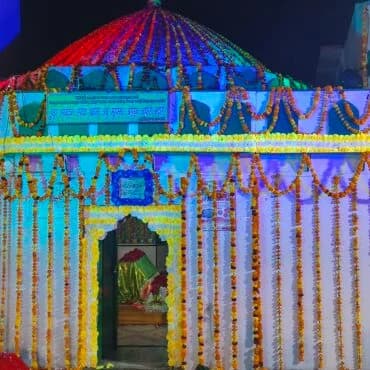
Dargah Shareef
Click to enlarge

Shrine illuminated
Click to enlarge

Community gathering
Click to enlarge
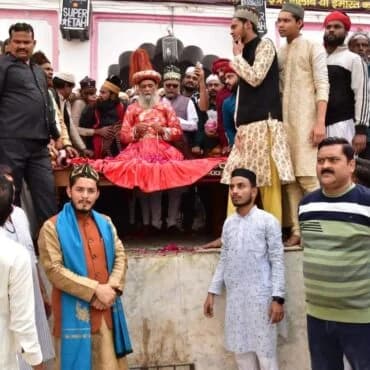
Devotees
Click to enlarge
Madar e Shareef
Chadar Poshi – A Sacred Expression of Devotion
“Madar e Shareef – Chadar Poshi” is a sacred tradition observed at the Qutbul Madar Dargah in Makanpur, where devotees have the opportunity to offer a symbolic cloth, known as a “chadar,” at the revered tomb of the saint. This act of devotion holds profound significance for believers, symbolizing reverence, gratitude, and a deep spiritual connection with the saint and the divine.
Latest articles
UNESCO recently enlists Chamba - The Heritage City
A Syrian Sufi, Sayyid Badiuddin Ahmad Zinda Shah Madar, played a foundational role in the spiritual and cultural evolution of Chamba. Born in Aleppo (Halab), Syria in the 9th century, Shah Madar was a Hasani-Hussaini Sayyid endowed with extraordinary spiritual qualities from birth. After extensive spiritual training under renowned saints like Bayazeed Bustami, he was commanded to spread Sufism, particularly in India where social evils prevailed. Arriving in India in 859 AD, he travelled extensively across regions including Gujarat, Rajasthan, Uttar Pradesh, Bengal, Kashmir, and Nepal. During his visit to Chamba, Shah Madar performed miraculous acts that protected the region from natural calamities and evil forces, paving the way for peaceful settlement. His blessings influenced Raja Sahil Verman to establish Chamba as the capital. The Madari Sufi tradition deeply shaped Chamba’s socio-cultural heritage, supported later by Mughal rulers. Today, Shah Madar’s Chillah in Chamba stands as a spiritual and historical landmark, with potential to be developed as a heritage tourism site.
Read moreA Pleasant Sight of Old Khanqahi Traditions Accomplished at Makanpur
Makanpur Sharif, sanctified by the presence of Zinda Shah Madar in 818 AH, remains a living center of Madari Sufi traditions. For centuries, this Khanqah has preserved the authentic customs of Sajjadagi, especially during the annual Urs held in Jumada Awwal. A unique tradition observed on the 16th and 17th Jumada Awwal involves the hereditary Sajjada Nashin enthroning on Takht-e-Sajjadagi while a sacred boat containing the Holy Quran is ceremoniously presented. This ritual symbolizes the Prophet Muhammad’s teachings comparing his Ahl-e-Bait to the Ark of Prophet Nuh and emphasizing adherence to the Quran and his family. Despite challenges posed by false claimants, the hereditary lineage of the Madari Sajjada Nashins has remained intact. The Khanqah continues to serve as a spiritual center where faith is renewed, disciples are initiated, and communal langar is distributed, preserving a 600-year-old legacy.
Read moreBiographical Sketch of Sayyid Badiuddin Ahmad Zinda Shah Madar
Sayyid Badiuddin Ahmad Zinda Shah Madar, also known as Qutb-ul-Madar and Madar-e-Alam, was born on 1st Shawwal 242 AH (856 CE) in Aleppo, Syria. A direct descendant of the Prophet Muhammad (SAWS) through both Imam Hasan and Imam Hussain, he displayed miraculous signs from birth. By fourteen, he mastered both exoteric and esoteric sciences. He received Khilafat from Sultan-ul-Arifeen Bayazeed Bistami and later direct spiritual training from the Prophet Muhammad (SAWS) and Mawla Ali. Commanded to spread Islam in India, he arrived in 281 AH after a miraculous sea journey. For over five centuries, he travelled across India propagating Islam, establishing spiritual centers, and guiding millions. He founded and strengthened several Sufi orders including Madariyya and Owaisiyya. He passed away in 1417 AD in Makanpur, where his Dargah remains a major center of devotion and spiritual learning.
Read moreSupport the shrine
Preserve centuries of
sacred heritage
Your donation helps maintain the Dargah and serves thousands of pilgrims who visit Makanpur Shareef each year.